In the hospitality industry, certain metrics have become essential.
Management monitors the following on a daily basis:
This data is essential because it enables the institution to manage its business and financial operations.
But they tell only part of the story, because behind the visible performance metrics lie numerous indicators that directly influence operating costs, customer satisfaction, profitability, and operational performance.
And yet, these metrics are often overlooked or even completely absent from dashboards.
Why Historical Indicators Are No Longer Enough

Occupancy rates and RevPAR remain essential metrics.
However, they primarily answer one question: How is the hotel’s business performing?
They rarely help us understand:
- Why Certain Expenses Are Increasing
- Why Do Some Complaints Keep Coming Up?
- Why does certain equipment result in additional costs?
- Why Some Rooms Are More Problematic Than Others
In a climate marked by rising energy costs, increasing customer expectations, and growing operational complexity, management needs a broader view of performance.
Indicator No. 1: The number of complaints related to comfort
When a customer expresses dissatisfaction, it often concerns:
- the room temperature
- hot water
- air conditioning
- air quality
These comments are sometimes treated as isolated incidents.
However, when they occur repeatedly, they often reveal a deeper problem.
By tracking their frequency, location, and trends, it becomes possible to detect certain issues before they further impact the customer experience.
Find out why your guests experience differences in comfort from one room to another in one of our articles on this topic.
Indicator No. 2: Room occupancy rate… compared to energy consumption
Two rooms may have the same occupancy rate.
However, their energy consumption may vary significantly.
This analysis often makes it possible to identify:
- improperly adjusted equipment
- energy abuses
- abnormal behavior
A room that uses significantly more energy than others for the same purpose generally warrants special attention.
In practical terms, variations in consumption are often more revealing than overall consumption itself.
Indicator No. 3: The number of unoccupied rooms that still consume a lot of energy

This is one of the most common situations in hotels.
Some rooms continue to consume energy even though they generate no revenue.
This may include:
- heating
- air conditioning
- certain electrical equipment
At the room level, the impact seems limited.
At the facility level, however, the costs can become significant.
To find out what an unoccupied but still-heated room actually costs, read our article.
Metric #4: Time spent managing recurring technical issues
Technical teams and operations managers often spend a significant portion of their time:
- resolve the same incidents
- make repetitive adjustments
- perform maintenance on equipment that frequently drifts
This time is rarely measured.
Yet it represents a real cost.
The more a hotel has to address preventable problems, the less time its staff can devote to improvement initiatives.
We discuss this topic in more detail in an article titled “Why Your Teams Spend Too Much Time Dealing with Avoidable Technical Issues.”
Indicator No. 5: Energy deviations detected each month
Overall consumption remains a useful metric.
But it doesn't always help us understand what's really going on.
Tracking deviations helps you determine where they occur, how often, and on which equipment.
This approach thus offers a much more practical perspective, since the goal is not simply to note an increase.
The goal is to identify the cause.
Indicator No. 6: The actual level of comfort in the rooms
Comfort is often considered subjective.
However, some parameters are perfectly measurable:
- temperature
- humidity
- air quality
- stability of conditions
This data helps provide an objective view of the customer experience.
And, most importantly, it allows you to take action before a complaint arises.
Indicator No. 7: The number of interventions that could have been avoided
An indicator that is rarely tracked.
And yet it is very revealing.
When a service call is caused by an incorrect setting, a deviation detected too late, and/or a lack of visibility, it often represents an avoidable cost.
The more a hotel reduces these interventions, the more it improves its productivity, responsiveness, and operational efficiency.
Why These Metrics Are Becoming Strategic
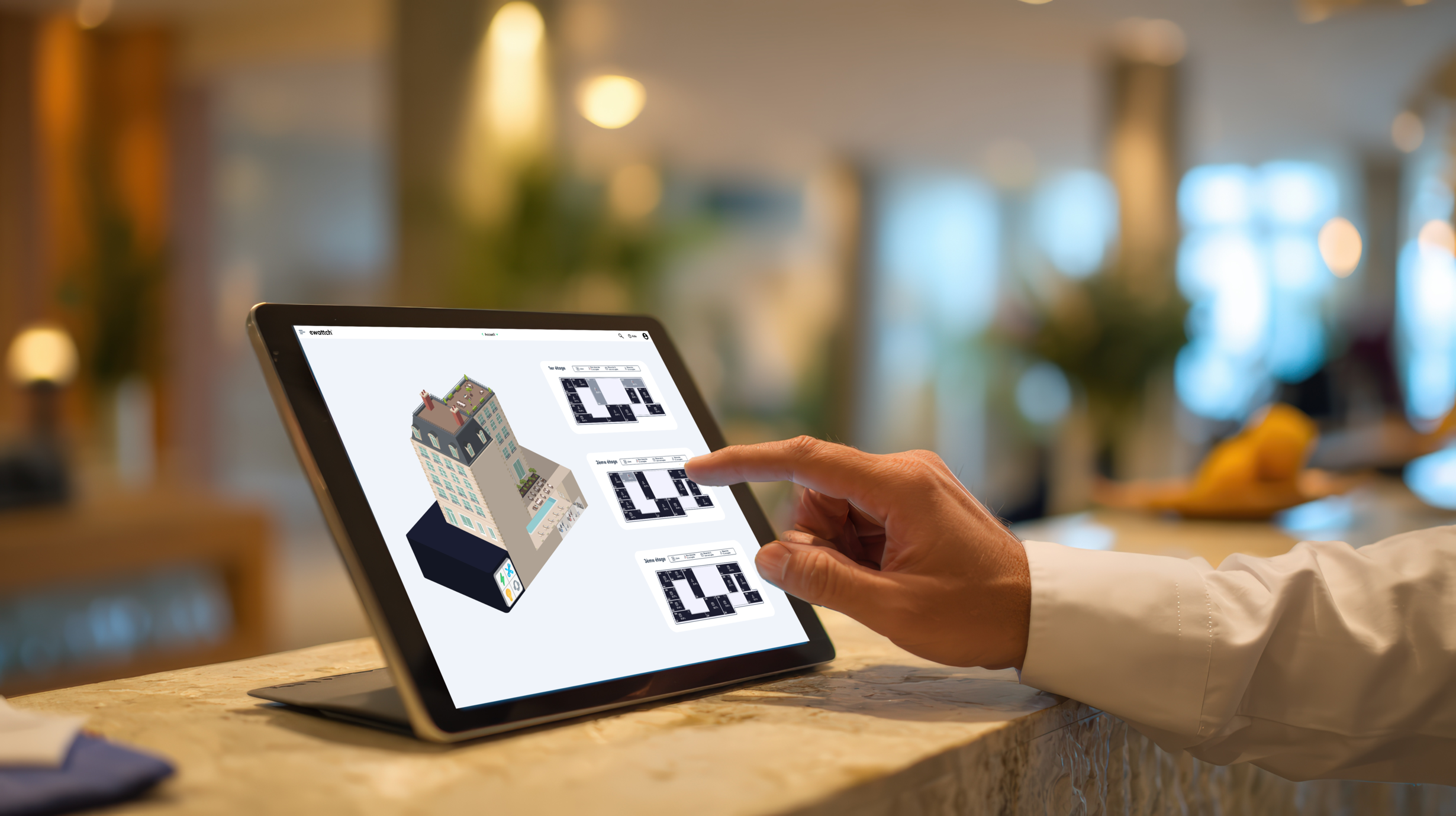
For a long time, hotel management teams have steered their operations primarily based on business metrics.
This approach remains essential, but it is no longer enough.
Current challenges also call for a better understanding:
- operating costs
- customer comfort
- technical equipment
- energy consumption
The top-performing hotels are now seeking to align their sales performance with their operational performance.
What the Most Advanced Institutions Are Doing
The top-performing hotels don't necessarily have more data.
They simply make better use of the data they already have.
They are looking to:
- detect deviations quickly
- understand actual uses
- anticipate problems
- manage their operations more precisely
This approach allows them to reduce certain expenses, improve the customer experience, and optimize available resources.
Do you really have a complete picture of your hotel's performance?
Occupancy rate, ADR, and RevPAR remain essential metrics.
But they are no longer sufficient for effectively managing a hotel.
Today, many drivers of performance can be found in data that is often less visible:
- customer comfort
- energy waste
- time spent on incidents
- room usage
- operational efficiency
Institutions that are able to track and analyze these indicators often have a much clearer picture of their operations.
And, as a result, they are better equipped to take action.
What if you finally had a complete overview of your hotels?
Certain issues affect your costs, your teams, and the customer experience without showing up in your traditional metrics.
Identifying the right metrics is often the first step toward sustainably improving your institution's performance.
To do so, check out our solution designed specifically for hoteliers today, and let’s discuss your project together.