
For a long time, energy issues were primarily discussed in terms of costs, bills, or regulatory requirements.
Today, the situation is changing rapidly.
In impact-driven initiatives such as B Corp, energy is no longer limited to a matter of consumption.
It has become an issue directly linked to the consistency of commitments, operational control, and the ability to measure and improve one’s impact over time.
Because behind the energy issues lie:
- environmental issues
- operational challenges
- credibility issues
- and management challenges.
In other words, it becomes difficult to talk about a positive impact without understanding how energy is actually consumed and managed.
Why Energy Is Important to B Corp
B Corp certification evaluates companies based on their overall operations.
And among the areas analyzed, environmental impact plays a significant role.
This includes, in particular:
- greenhouse gas emissions
- resources consumed
- environmental practices
- energy consumption.
Why? Because energy directly affects the environmental footprint, carbon emissions, and the day-to-day operation of buildings and equipment.
In many sectors, energy is therefore a key driver for improving impact.
B Corp doesn't just ask for commitments… it asks for proof
This is one of the fundamental principles of the B Corp approach.
It’s not just about communicating, setting goals, or making a lot of promises.
Above all, standards encourage companies to measure, monitor, organize, and improve their practices over time.
And when it comes to energy, this often raises several key questions:
- Is energy consumption monitored?
- Have the irregularities been identified?
- Are any improvement measures being implemented?
- Are these uses truly optimized?
In practical terms, this means that the credibility of an impact-driven approach also depends on the ability to understand and manage energy consumption.
Why Energy Consumption Remains Difficult to Control
In many companies, energy management is still very limited.
Energy consumption is often analyzed after invoices are received, using broad metrics and without any real insight into actual usage.
Result:
- Some abuses go unnoticed
- The equipment is running unnecessarily
- Losses become entrenched over time
And these situations apply to many types of commercial buildings, including hotels, retail spaces, mixed-use facilities, and offices.
Very often, problems stem from simple situations:
- active heating without the need for
- continuous ventilation
- improperly adjusted equipment
- operation that is disconnected from actual occupancy.
The Direct Link Between Energy, Exploitation, and Impact

Energy cannot be analyzed in isolation.
It is directly linked to how buildings function, their actual uses, and their day-to-day operation.
For example: A poorly managed building consumes more energy, but also often leads to greater discomfort, more service calls, and greater operational complexity.
In other words: Energy performance depends largely on how a building is operated and managed.
This is precisely why topics related to control systems, building management systems, data, measurement, and automation are playing an increasingly important role in impact initiatives.
Why Measurement Is Essential
You can't improve what you don't measure.
This idea has become central to CSR and B Corp initiatives.
No visibility:
- It is difficult to identify abuses
- It is impossible to prioritize actions
- It is difficult to demonstrate the progress that has been made.
In particular, the measure allows for:
- to understand the customs
- to compare periods
- to identify anomalies
- to track improvements over time.
But today, simply measuring is no longer enough.
The most advanced companies are now seeking to put their data into context, manage their equipment, and take swift action in the event of deviations.
From Energy Monitoring to Energy Management
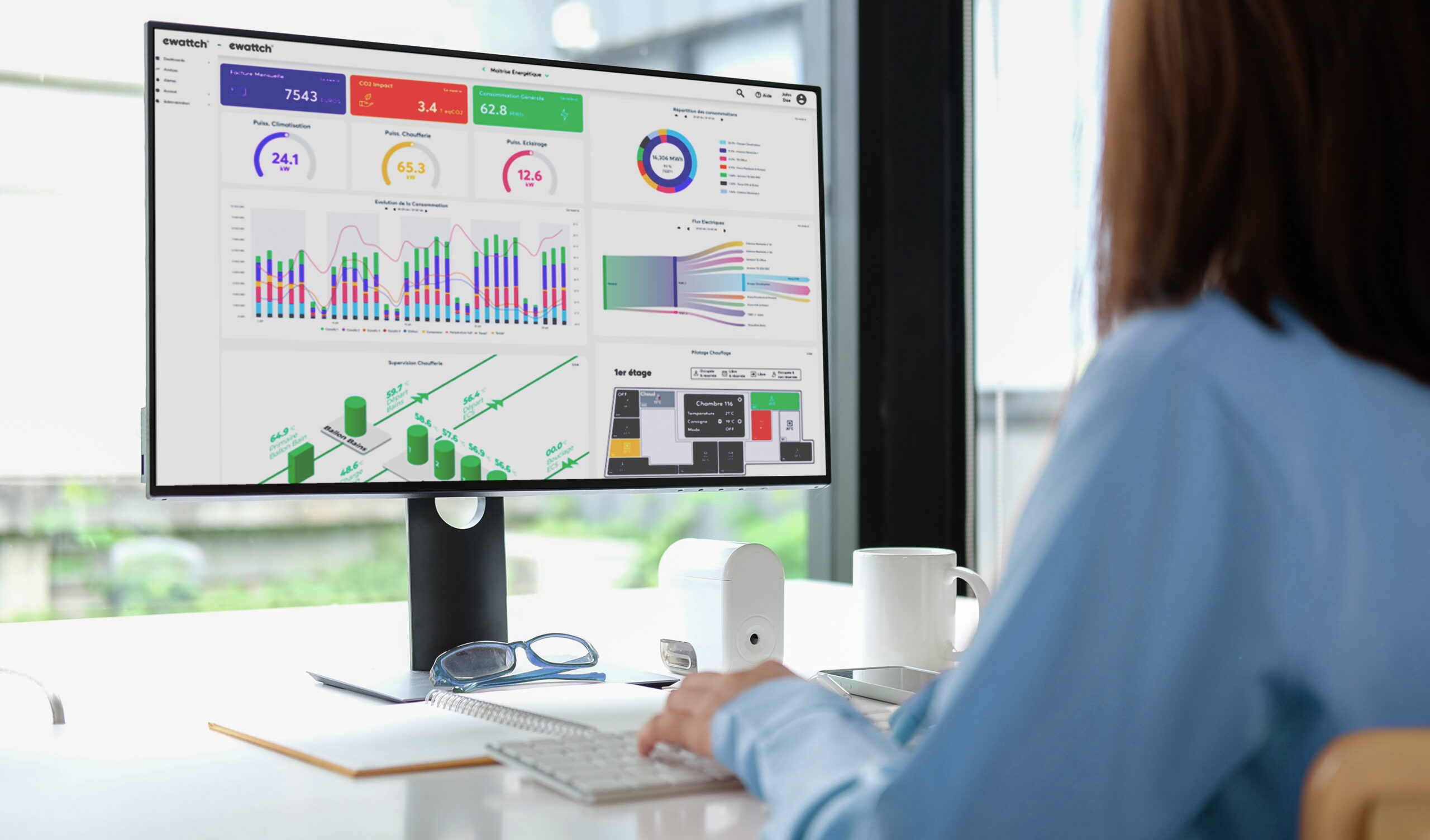
For a long time, many organizations limited themselves to tracking consumption.
This already provided a comprehensive overview, allowed them to monitor expenses, and helped identify certain discrepancies.
But this approach quickly reaches its limits.
Why? Because it is often implemented too late, is too broad, and is of little practical use.
Today, the most structured approaches aim to go even further:
- detection of deviations
- equipment adjustment
- adaptation to real-world use
- continuous optimization.
In other words, the approach is gradually shifting from “energy monitoring” to“energy management.”
Why Governance Is Becoming Strategic in Impact Initiatives
In frameworks such as B Corp, continuous improvement plays a central role.
And this improvement necessarily requires a better understanding of usage patterns, the ability to take action, and more precise management of equipment and consumption.
Without proper guidance, deviations persist, gains remain limited, and actions become difficult to measure.
Energy management makes it possible, in particular, to:
- to adapt the equipment to actual uses
- to limit unnecessary consumption
- to reduce certain hidden losses
- to improve the overall consistency of operations.
B Corp & Energy: A Matter of Consistency
Companies engaged in impact initiatives are increasingly expected to demonstrate their ability to align their stated commitments, actual operations, and measurable results.
And energy is becoming a particularly prominent issue in this regard, as it directly affects the environment, operations, costs, comfort, and everyday activities.
In practical terms, this means that the credibility of an impact-driven approach also depends on the consistency between environmental commitments and the actual operation of buildings.

Toward a More Structured Approach to Energy Performance
In initiatives like B Corp, energy becomes much more than just a technical issue.
It has become a concrete indicator of a company’s ability to measure its impact, structure its practices, and sustainably improve its operations.
And this trend is gradually pushing organizations to go beyond simply tracking consumption.
As a result, the most forward-thinking companies are no longer focused solely on reducing their energy consumption.
They are seeking to understand their energy usage, organize their efforts, and make lasting improvements to their operations.
This trend is gradually transforming the way we approach energy, as the issue is no longer limited to a bill or a regulatory requirement.
It is becoming a key area of management, operations, and overall performance.
Turn Your Energy Efficiency into a CSR Lever
Measuring energy consumption, understanding usage patterns, and managing equipment are becoming essential tools in initiatives focused on impact and continuous improvement.
Today, the most advanced companies are seeking to integrate energy efficiency with operations and practical management.
With Ewattch, you’ll receive support in managing your energy consumption.
An important step in showcasing your CSR commitments.