In many hotels, the health log is viewed as an administrative requirement.
A document to keep on file.
A form to fill out.
A document to present in the event of an inspection.
However, its function goes far beyond that.
The sanitation logbook is, above all, a tool for monitoring and traceability.
It provides a clear overview of the condition of the potable water systems and the actions taken to ensure their proper management.
And in a context where issues related to Legionnaires' disease, ARS inspections, traceability, and risk management are becoming increasingly important, its role is taking on greater significance.
What is a health record?
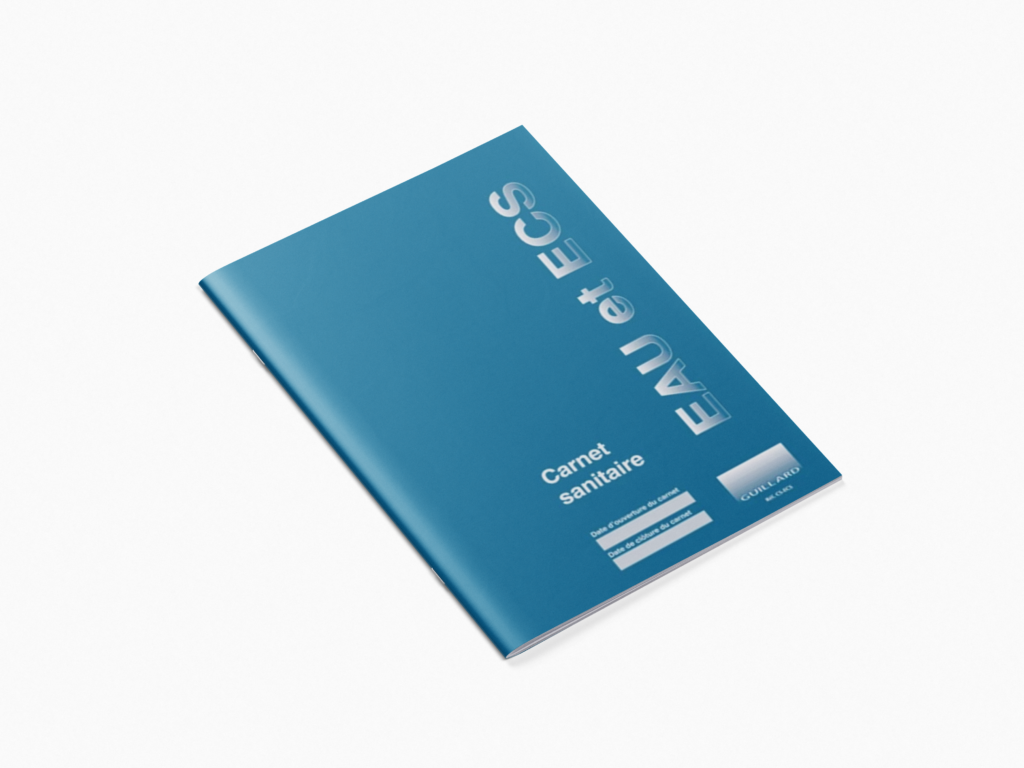
The sanitation log is a document that compiles information regarding the monitoring of an establishment’s sanitation facilities.
Its purpose is simple: to demonstrate that the equipment is monitored, maintained, and tracked over time.
For a hotel, it therefore serves as the building’s technical record.
In particular, it allows you to find:
- temperature readings
- the analyses conducted
- maintenance operations
- technical interventions
- the incidents observed
- the corrective actions taken
Simply put, it doesn't just document the state of the network.
It also documents how the institution manages it.
Is a health record required at a hotel?
The answer is simple… Yes.
As part of the monitoring of communal domestic hot water systems, certain information must be retained and made available to health authorities.
The health log serves precisely this purpose.
It allows you to centralize related items:
- on monitoring
- at the interview
- maintenance
- corrective actions
During an inspection, it is often one of the first documents to be reviewed.
If it is missing or out of date, this can quickly complicate interactions with health authorities.
What should a health logbook in a hotel include?
The exact content depends on the facilities and procedures in place.
However, certain pieces of information are generally essential.
Network Characteristics
The health record should provide insight into:
- the network's organization
- the equipment available
- sensitive issues
- monitored areas
Temperature Readings
Temperatures are one of the key monitoring indicators.
The notebook should make it possible to find:
- the checkpoints
- the measurement dates
- the observed results
The analyses conducted
When analyses are performed, their results must be retained.
This makes it possible to track changes in the network, justify the actions taken, and document any anomalies.
Maintenance Operations
Every major procedure deserves to be documented.
For example: cleaning, disinfection, equipment replacement, technical adjustments, …
Corrective Actions
When an anomaly is detected, it is important to be able to document what was observed, what actions were taken, and on what date.
The logic is always the same: keep a clear record of the actions taken.
Why is the health record important during an ARS inspection?

During an inspection, inspectors do not merely seek to ascertain the current situation.
They are also trying to understand:
- How the network is monitored
- How anomalies are handled
- How Risks Are Managed
The health record is designed to provide exactly those answers.
Without a history, it becomes difficult to demonstrate:
- the consistency of follow-up
- the performance of audits
- incident management
It is therefore an essential component of traceability.
The Most Common Mistakes
In many institutions, the difficulties stem less from a lack of action than from a lack of organization.
The following are often found:
- scattered data
- several different files
- incomplete logs
- information that is hard to find
- irregular updates
The result? Teams spend time searching for information when they need it.
And if there’s an audit, the situation quickly becomes stressful.
Why Excel spreadsheets quickly reach their limits
Many hotels still use:
- Excel files
- paper documents
- manual readings
These methods often work at first.
But they quickly become complex as the number of rooms increases, equipment multiplies, and control points diversify.
This creates numerous risks: omissions, data entry errors, loss of information, and difficulty retrieving historical data.
Therefore, the problem is not the document itself.
It is the administrative burden it represents.
How can we simplify the management of the health record?
Today, the most advanced institutions are seeking to centralize their information.
The goal is to:
- save time
- improve traceability
- reduce administrative tasks
- secure data
This often involves:
- greater centralization
- automatic historicization
- greater visibility into equipment
- alerts in the event of a deviation
This makes it much easier to keep the building maintenance log up to date.
And most importantly, staff can focus more on the day-to-day operation of the building.
The Health Log as a Management Tool
This is probably the most underestimated aspect.
The health record is not just a regulatory document.
When used properly, it also becomes:
- a monitoring tool
- a management tool
- a decision-making tool
It helps identify certain recurring issues, deviations, and problematic equipment.
In other words, it helps provide a better understanding of how the facilities actually operate.
An Important Role in Water Management
The sanitation log plays a central role in the management of water systems in the hospitality industry.
Far more than just a regulatory requirement, it serves as a valuable tool for traceability and risk management.
Establishments that have a structured health record generally benefit from:
- greater visibility
- enhanced traceability
- a more relaxed approach to preparing for exams
- more effectively managed operations
In a hotel, documenting the actions taken is often just as important as the actions themselves.
Is your health record really up to date?

Temperature readings, maintenance, service history…
A structured monitoring system facilitates compliance, traceability, and the day-to-day management of your facilities.
To simplify the management of your health record through better data centralization, Ewattch supports you with its dedicated solution.