The hospitality industry is evolving at a rapid pace.
In recent years, schools have faced many challenges:
- sustained rise in energy costs
- changing customer expectations
- new regulatory requirements
- recruitment challenges
- the growing importance of CSR issues
In this context, priorities are shifting.
The question is no longer just: How can we attract more customers?
But also: How can we run our business more efficiently, profitably, and sustainably?
Because behind the commercial challenges lie operational challenges that are just as strategic.
Energy management, customer comfort, automation, and impact assessment: several trends already visible today are expected to accelerate in 2026.
Here are the five trends that will profoundly transform the daily lives of hoteliers in the coming years.
Trend No. 1: Energy Efficiency as a Management Priority

Long considered a purely technical issue, energy has now become a strategic issue.
There are many reasons:
- increase in operating costs
- pressure on margins
- regulatory requirements
- growing expectations regarding sustainability
Today, energy-related decisions are no longer the sole responsibility of technical managers.
They also involve senior management, finance departments, and CSR departments.
Energy efficiency is thus gradually becoming a key driver of competitiveness.
Consequently, a hotel that can reduce its energy consumption without compromising the guest experience directly improves its profitability, resilience, and ability to invest.
Trend #2: Hotels Are Shifting from Monitoring to Management
For many years, energy management relied primarily on bills, monthly meter readings, and reporting spreadsheets.
This approach made it possible to identify instances of misuse.
But it rarely allowed for a quick response.
Today, the most advanced institutions are seeking to go even further.
They want:
- understand their uses
- detect deviations
- anticipate problems
- act more quickly
The difference is significant.
Because simply seeing your consumption doesn't mean you're in control of it.
As a result, the top-performing hotels are no longer content to simply track their data.
They seek to leverage that data to make concrete decisions.
This way, performance management gradually becomes an operational advantage.
Find out why simply tracking your energy consumption is no longer enough in our dedicated article.
Trend No. 3: Customer comfort is becoming a performance metric

Comfort has always been at the heart of the hotel experience.
But it was often seen as a concept that was difficult to measure.
Today, that vision is changing.
Many parameters can now be monitored and optimized:
- room temperature
- air quality
- hot water availability
- Consistent comfort across all spaces
These issues have a direct impact on customer satisfaction, online reviews, customer loyalty, and the establishment's reputation.
Because a customer doesn't necessarily notice high-performance technology.
On the other hand, he immediately notes:
- a room that's too hot
- unstable temperature
- poor air quality
As a result, comfort becomes a true indicator of operational performance.
To help you prepare for this, find out why your guests experience differences in comfort from one room to another in a dedicated article.
Trend No. 4: Automation Is Making Its Way Into Day-to-Day Operations
Automation is no longer limited to large hotel chains.
It is gradually becoming accessible to all types of establishments.
Its goal is not to replace teams.
Its goal is to save them time.
The number of use cases is growing:
- Management of Vacant Rooms
- Automatic heating and air conditioning scenarios
- technical alerts
- equipment optimization
- Connection between PMS and BMS
Thanks to these automations, teams can focus on tasks that add more value.
Operations then become more streamlined, more responsive, and less reliant on repetitive manual tasks.
Learn more in our article, “Why Connecting Your PMS to Your BMS Is Essential in the Hospitality Industry.”
Trend #5: Impact initiatives are becoming more concrete

Environmental commitments aren't going away. Quite the contrary.
But their nature is changing.
In the past, companies mainly communicated their intentions.
Today, they must demonstrate their results.
This trend can be seen in:
- labels
- Certifications
- RFP's
- customer expectations
Standards such as the Clef Verte label and B Corp certification, among many others, now encourage hotels to measure their actions, track their metrics, and demonstrate their progress.
The logic is changing. What matters is no longer just what is announced.
It is what is actually put into practice.
What This Means for Hoteliers
These trends have one thing in common.
They are all based on a better understanding of operations.
In the future, the top-performing institutions won't necessarily be the ones that invest the most.
Above all, they will be the ones who are able to:
- measure with greater precision
- be more proactive
- manage more effectively
- act more quickly
The challenge is no longer simply to add equipment or tools.
It is to make better use of what we already have.
In other words: A hotel's performance will increasingly depend on the quality of its management.
Is your hotel ready for the challenges of 2026?
The year 2026 will likely not mark a sudden turning point for the hotel industry.
However, it is expected to accelerate several transformations that are already underway.
Issues that seemed secondary just a few years ago are now becoming strategic:
- energy efficiency
- energy consumption management
- customer comfort
- automation
- environmental impact
And behind each of these challenges lies the same reality: hotels need to better understand their operations in order to manage them more effectively.
Businesses that make this shift will have a lasting advantage.
Not only in terms of their costs, but also in terms of the experience they offer their customers.
What if you started preparing for these challenges right now?
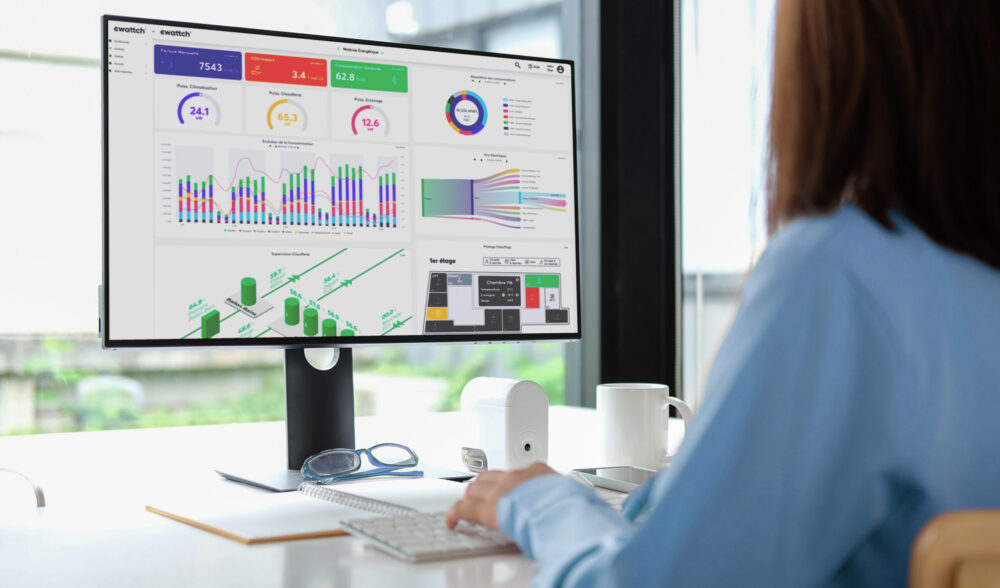
Energy efficiency, guest comfort, automation, sustainability initiatives…
The most successful establishments are already structuring their operations around these new challenges.
Identify the most relevant strategies for your institution and start preparing today for tomorrow’s changes with our support.