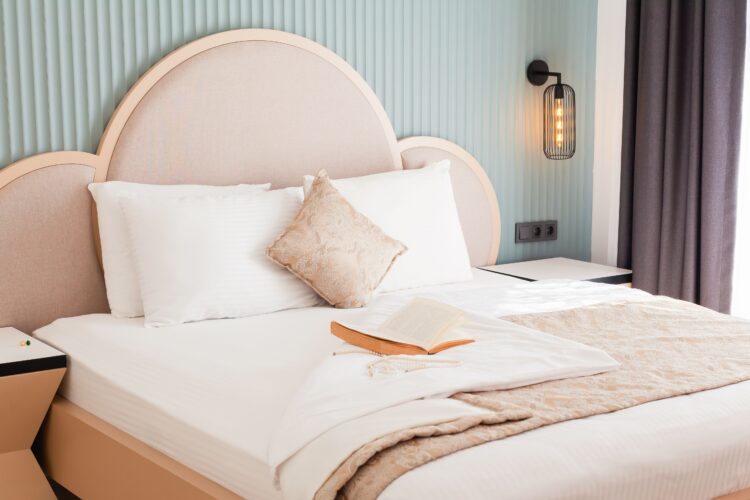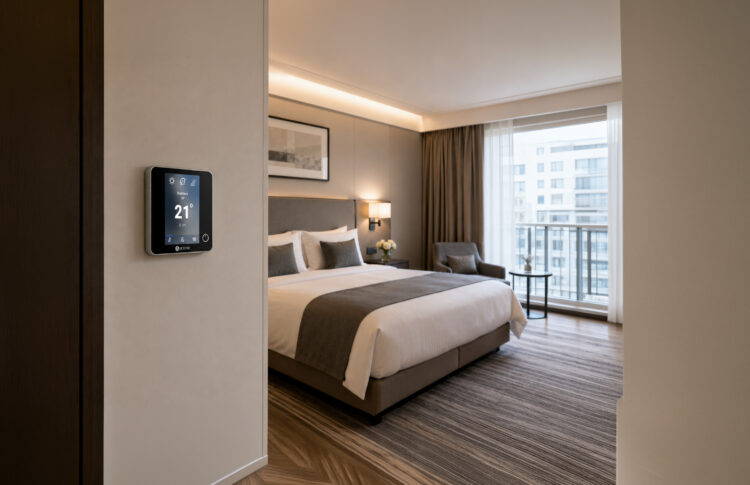
An empty room shouldn't cost anything. And yet…
In most hotels, rooms are kept heated, ventilated, and sometimes air-conditioned… even though they generate no revenue.
Taken individually, this seems insignificant, but on an institutional scale, over the course of a full year, the impact becomes significant.
And above all: this impact remains completely invisible.
Why an unoccupied hotel room continues to use energy
In many hotels, rooms are kept at standard conditions whether they are occupied or not: a constant temperature, active ventilation, and equipment left running.
Why?
- to ensure a comfortable arrival
- to prevent temperature fluctuations
- or simply for ease of use
The result? A room continues to consume energy even when it's empty.
How much does an empty but heated room cost?
Let’s consider a specific example based on an industry-wide estimate.
Keeping a room at a constant temperature throughout the day means:
- active heating
- continuous ventilation
- sometimes hot water production

Estimated cost: between €1.50 to €3 per day per room
If we apply this to a hotel that has an average of 30 unoccupied rooms:
- €2 per day per room
- 365 days

More than €20,000 per year
And this has had no positive impact on revenue, the customer experience, or service quality.
In other words, a hidden but very real cost.
The real problem: invisible but cumulative losses
€2 a day? That’s not what’s alarming.
The real issue is the repetition, the accumulation, and the complete lack of visibility, because these losses are not tracked, measured, or prioritized.
They fly under the radar.
And yet, they often amount to several thousand euros a year. These hidden losses aren’t limited to guest rooms. We explore this topic in our article on why your hotel consumes more energy than you think.
Why does this excessive consumption persist in hotels?
It's not a matter of negligence; it's a matter of how things work.
In most institutions:
- the systems are not linked to actual occupancy,
- the settings are fixed,
- teams lack visibility.
As a result, we consume continuously without making any adjustments and, above all, without being fully aware of it.
Is it possible to reduce energy consumption without compromising customer comfort?
This is often the main obstacle: the fear of negatively impacting the customer experience.
But today, this concern is no longer valid.
You can:
- lower the temperature when the room is unoccupied
- anticipate arrivals
- restore the room to a comfortable state at the right time
And this is done without any perceived loss of quality for the customer, because optimization doesn’t mean cutting back.
We also discuss this topic in our article: how to ensure guest comfort in the hospitality industry.
How Hotels Optimize the Management of Unoccupied Rooms
The top-performing properties have changed their approach.
They no longer manage their rooms “by default.” Instead, they manage them based on actual usage.
In concrete terms, this means:
- automatic switching to eco mode when the room is unoccupied
- reheating before serving
- real-time adjustment
This approach results in lower energy consumption, greater control, and a consistent customer experience.
A broader issue: energy management & performance
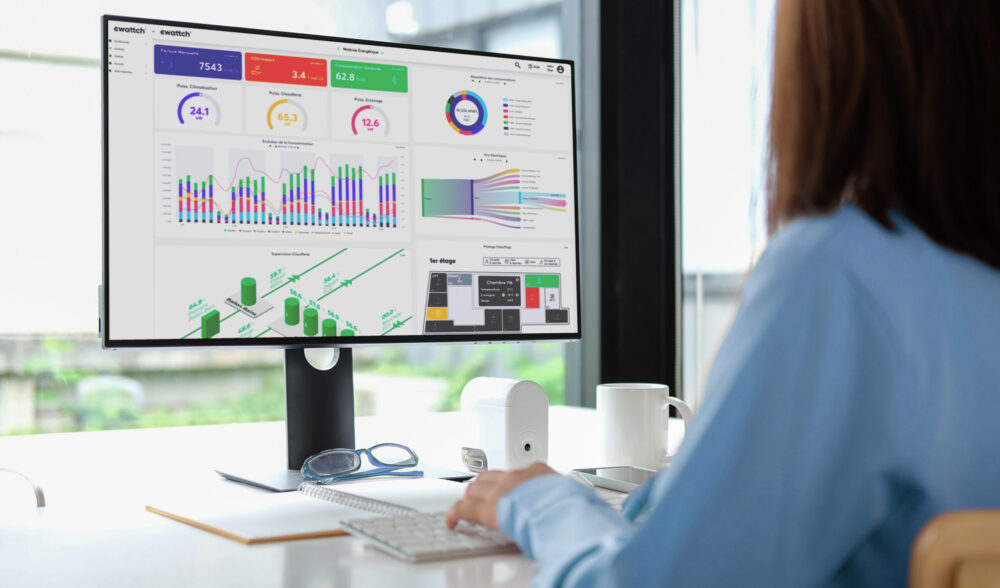
The issue of unoccupied rooms is just the tip of the iceberg, as the same logic applies to hot water, ventilation, and the building’s utility spaces.
What do they have in common? It’s always the same pattern: round-the-clock operation, a lack of adaptation, and poor management.
These issues are also part of a structured environmental initiative.
For more information, we invite you to read our article Green Key Label: Everything You Need to Know About the Criteria and Processes.
An empty room shouldn't cost that much
The conclusion is simple.
An unoccupied room generates no income, but it can incur significant costs—and, more importantly, hidden costs.
By 2026, a hotel’s performance will no longer depend solely on its occupancy rate, but on its ability to align its energy consumption with its actual operations.
What if you could see how your empty rooms are being used?
Do you have a clear picture of the occupancy rates for your vacant rooms?
Without concrete data, losses remain hidden and decisions are based on guesswork.
Yet this unnecessary consumption can amount to several thousand euros a year for a single facility.
Identifying them allows you to quickly pinpoint the right levers and improve profitability in the long term.
Ewattch helps you identify this data and establish a system for managing it.