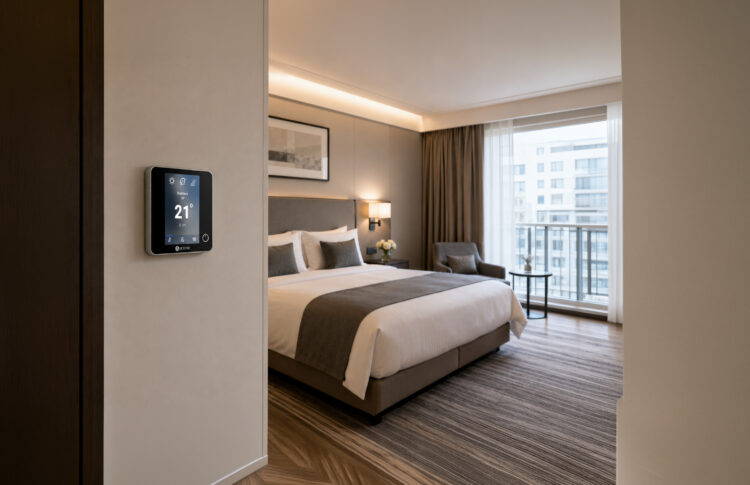
Your energy bill is going up… but you don’t know why.
The settings seem correct. The equipment is working. And yet, costs keep rising.
In most hotels, the problem isn’t caused by a major malfunction.
It stems from an accumulation of small losses that go unnoticed on a day-to-day basis.
Minor discrepancies, occurring every day, in every area of the facility.
This is precisely what makes energy consumption difficult to control, because what you don’t see is often what costs you the most.
Why does your hotel use more energy than you think?
When energy bills go up, the instinct is often the same: we look at the numbers… then make minor adjustments to the thermostat settings, the utility contract, and some equipment.
But in most cases, that’s not where the problem lies.
The real issue is that overconsumption is rarely obvious; it doesn’t stem from a single, exceptional event, but rather from a series of small deviations that occur every day.
Result?
You don't consume too much all at once. You consume too much on a continuous basis.
Hidden energy losses in a hotel
In a hotel, everything runs continuously: heating, air conditioning, ventilation, domestic hot water, and technical equipment.
That is precisely where problems lurk—not in major breakdowns, but in the minor daily malfunctions.
You’ve probably:
- an empty room… but one that’s heated all day,
- the air conditioning is running while the window is open,
- a ventilation system that runs continuously, even during off-peak hours,
- a hot water heater that isn't set properly,
- equipment that operates "by default"
Taken individually, these discrepancies may seem insignificant, but on an institutional level, they become systemic.
Why abuses go unnoticed
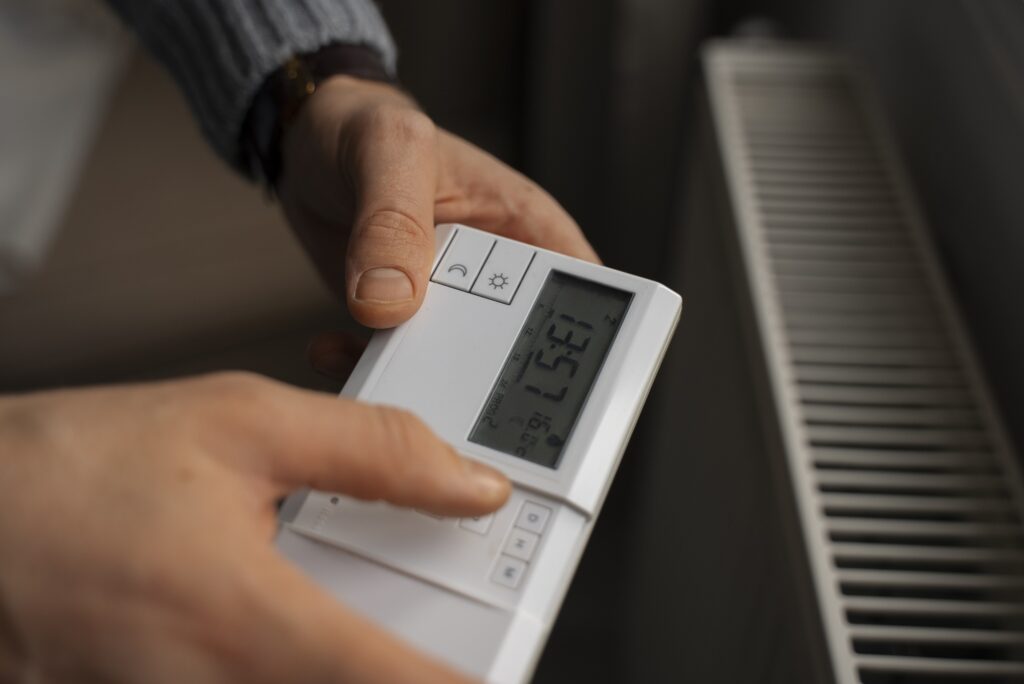
In many hotels, energy management still relies on standard settings, habits, and a broad—but not very detailed—overview.
The problem here is not a lack of rigor but a lack of transparency.
No specific data available:
- the irregularities are not identified,
- the causes are not understood,
- and it's hard to prioritize tasks.
Ultimately, we’re managing a complex system… without really seeing how it works.
The true cost of excessive energy consumption
What you see
- a rising bill
What you don't see
- equipment that continuously compensates,
- systems that operate independently of occupancy,
- settings that lead to hidden energy waste.
According toADEME, energy costs can account for up to 10% of a hotel’s revenue, and a significant portion of this consumption is avoidable.
But the impact doesn’t stop there, as these issues also directly affect thermal comfort, air quality, and the availability of hot water.
In other words: the customer experience.
These discrepancies often lead to hidden dissatisfaction.
On this topic, find out how to ensure optimal guest comfort in the hospitality industry in a previous article.
The areas where the most money is wasted in a hotel
Not all areas of a facility consume the same amount of energy.
Some of them alone account for a large portion of the abuses, often without this being readily apparent in everyday life.
Why?
Because they involve several factors: continuous operation, heavy reliance on customer usage, and settings that are rarely adjusted in real time.
The result: it is these areas—though seemingly mundane—that generate the most losses, and thus offer the greatest opportunities for optimization.
Unoccupied rooms
The classic choice… and yet one of the main causes of overconsumption in a hotel.
In many establishments, a room continues to be treated as if it were occupied:
- active heating without a client,
- air conditioning maintained,
- equipment in long-term standby mode.
Why?
Because the systems aren't always linked to actual occupancy or are set to default settings.
The result: energy wasted… with no customers.
In fact, this area is often the first area to focus on for optimization.
Domestic hot water
Invisible to the customer… but one of the establishment’s biggest energy consumers.
Unlike other applications, hot water is produced continuously, regardless of actual usage, because it must be available at all times.
In practical terms, this is illustrated by:
- a permanent production,
- heat losses in the networks,
- settings that are rarely optimized.
And unlike a problem with the heating or air conditioning, a fluctuation in hot water supply is almost imperceptible… until it shows up on the bill.
Ventilation systems
Essential for comfort and air quality… but often left running constantly.
In many hotels, ventilation systems run continuously without being adjusted to actual usage: the same speed and intensity, regardless of occupancy.
They operate constantly with little or no adjustment, resulting in diffuse but continuous energy consumption.
This type of equipment doesn't "show up" on the bill… but it contributes significantly to the overall increase.
Technical areas
Spa, kitchen, laundry room… These are the areas of the facility that consume the most energy and are often the least monitored.
Why?
Because they run in the background, are used intensively, and offer little insight into their actual performance. This often results in high power consumption, prolonged operation, and limited detailed monitoring.
The result: significant expenses… that often go unnoticed in day-to-day operations.
These aren't exceptional anomalies; they're normal situations that become costly if left unaddressed.
Why do these losses persist over time?
If these losses occur, it is not due to a lack of competence.
It is because they are not integrated into a comprehensive approach.
Without a clear framework:
- the actions remain isolated,
- teams operate without a shared vision,
- The results are hard to keep track of.
This is precisely where structured initiatives like the Green Key certification come into their own.
They make it possible to move from isolated actions to a coherent and progressive approach.
How to Take Back Control of Your Energy Usage
The most successful hotels don't necessarily have more resources. They simply take a different approach.
They aren't just trying to reduce their consumption. They're trying to understand it and adjust it on an ongoing basis.
In practical terms, this is characterized by:
- aligning designated uses with actual occupancy,
- the rapid identification of abuses,
- fine-tuning the settings,
- and reliance on reliable indicators.
This approach enables them to achieve energy savings of up to 30% without compromising customer comfort and while ensuring smooth operations.
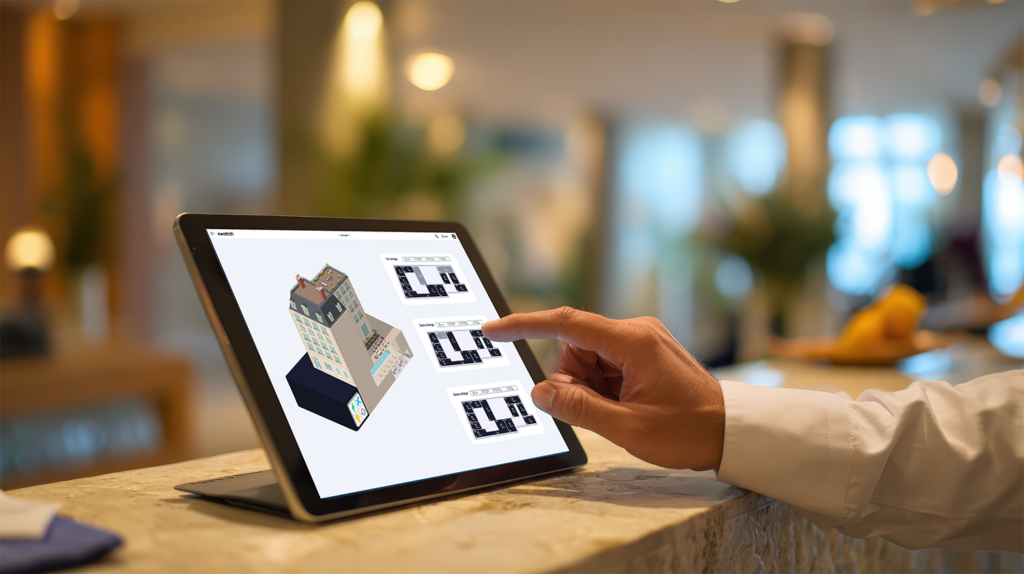
See to act more effectively
Most hotels aren’t poorly managed. They simply face an invisible problem, because energy losses don’t stem from major mistakes, but from an accumulation of small, daily inefficiencies.
And as long as they remain invisible… they persist.
So in 2026, the real question is no longer: “How can I cut costs?”
But rather: “Do I have a clear picture of what’s really going on in my hotel?”
What if you took back control of your hotel's energy consumption?
Understanding where losses occur is often the first step toward sustainably improving your facility’s performance, because before you can cut costs, you must first pinpoint exactly what is causing these issues on a daily basis: equipment, usage patterns, or a lack of proper calibration.
It is this visibility that makes it possible to take effective action without complicating operations or compromising the customer experience.
With Ewattch, get a clear picture of your equipment and identify opportunities for optimization.